Next-generation learning · ages 14–18 · 2026–2027

LUMINA

The Socratic Studio

Every student runs their own research expedition — with a panel of personalized AI mentors, alongside real teachers and classmates, inside simulated worlds where ideas get tested, not just read.

Talk to a mentor →
Why the old model breaks

From consuming a curriculum to pursuing a question

Consume the curriculumPursue a real question
1 teacher : 30 studentsA mentor panel for every student
Read about the thingSimulate the thing
Assess recallAssess reasoning
The architecture

Four pillars

1

Inquiry Expeditions

Each student commits to a driving question they care about — the whole term orbits it.

2

AI Mentor Panel

A personalized team of AI minds with distinct roles and memory of your journey.

3

Live Multiplayer Seminar

AI converses in the same room as teachers and classmates — visible, never hidden.

4

Simulation Sandboxes

Test ideas in climate, market, history, lab and city simulators.

Pillar 2 · interactive demo

Try the mentor panel

Maya's driving question: "Should her coastal town build a seawall?" Pick a mentor, ask a question, and see how each AI mind responds differently.

ASK MAYA'S MENTOR
Pillar 3 · the breakthrough

AI in the room, not a hidden tab

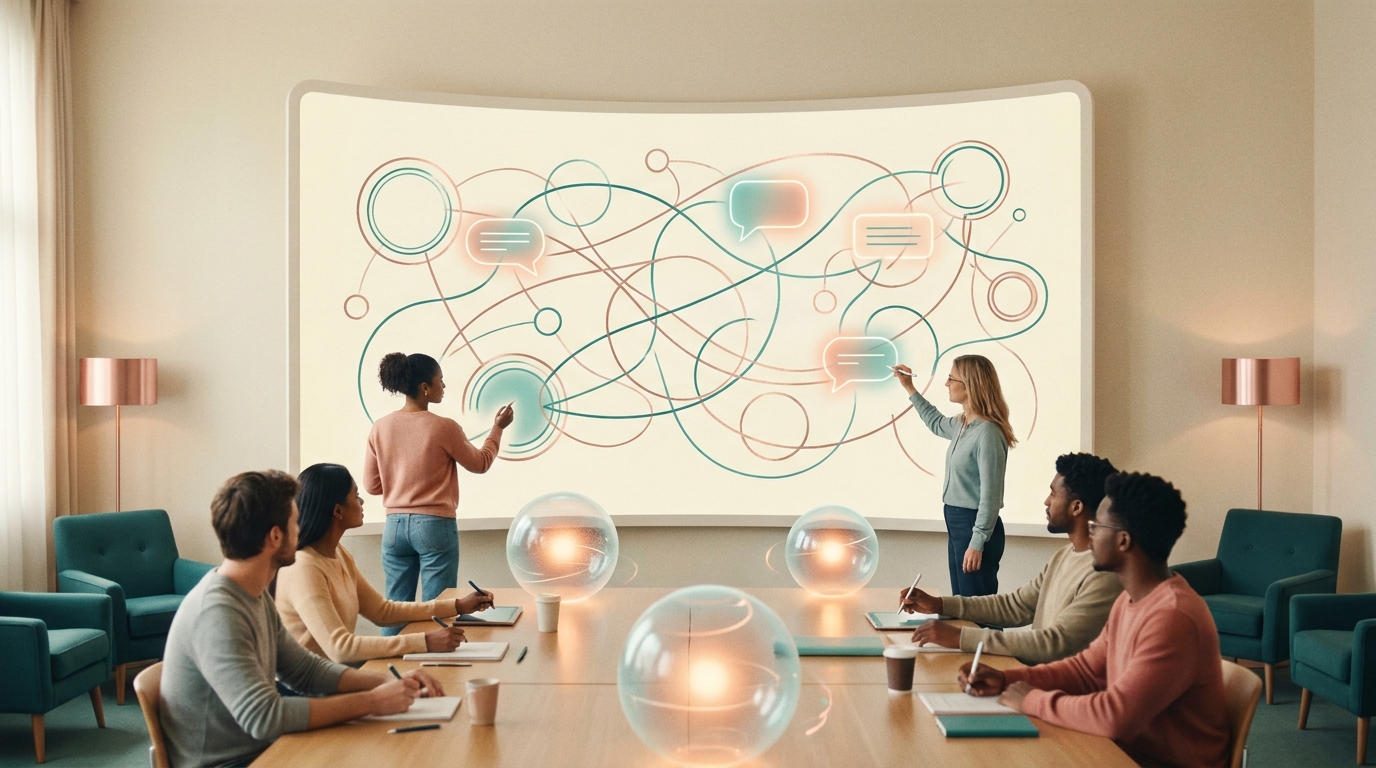
Students @-ask their mentors on a shared canvas. Classmates jump in. The teacher sees the full reasoning trail and can pause the room for a Socratic huddle. Because the AI is visible to the teacher, it becomes a thinking partner students learn to use well — not a cheating tool.
seminar
Built in, not bolted on

Guardrails

Transparency by default

Every AI exchange is visible to the teacher — no hidden homework-bot.

Productive struggle

The Socratic mentor must escalate questions, not hand over answers.

Provenance

Work logs which ideas came from AI, peers, or self — teaching honesty.

Human-in-the-loop

AI proposes, the teacher disposes. Grades are never fully automated.

At a glance

The model on one page

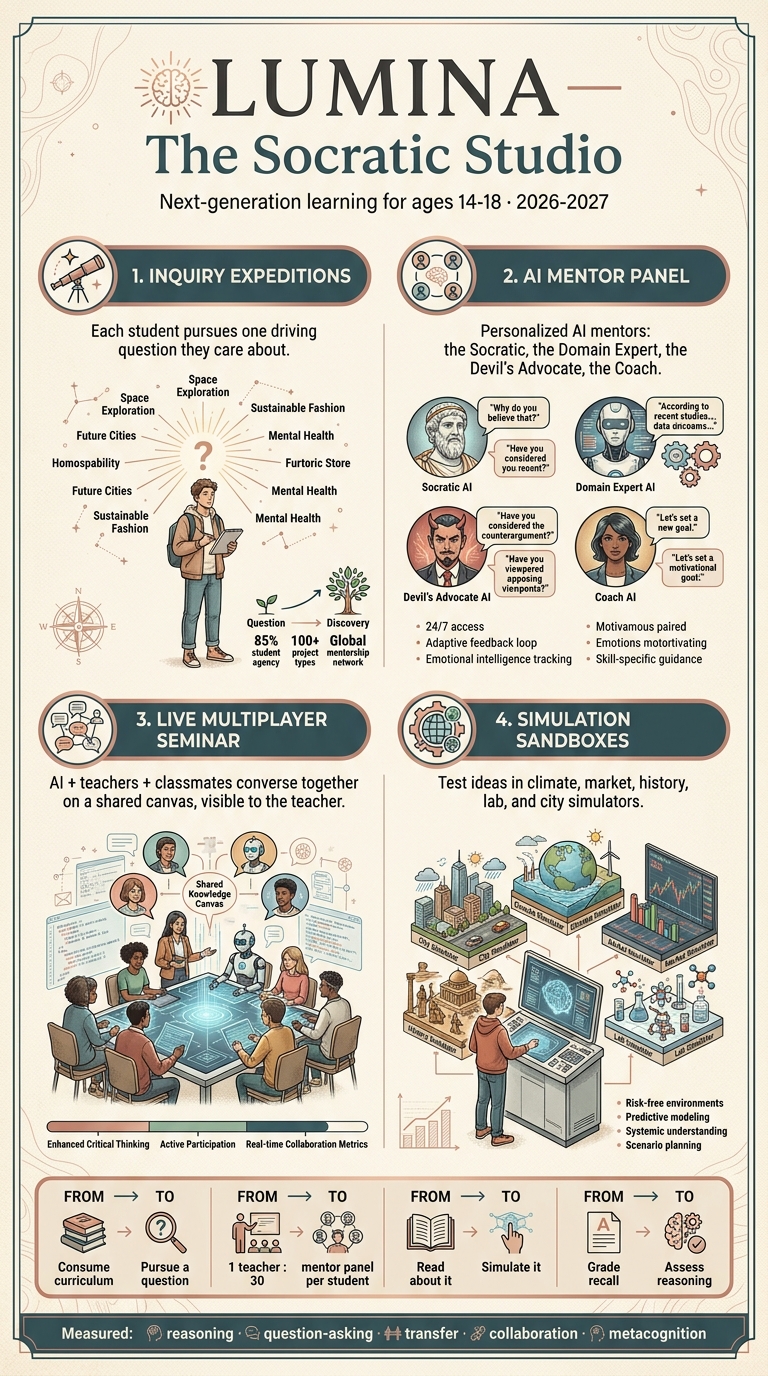
Lumina infographic